Donating food is one of the most direct and practical ways to help families, older people and anyone going through a hard time financially. But for the donation to be effective, it is worth thinking not only about good intentions but also about what can actually be received, stored and used.
Sealed products, in date and in sound packaging, are usually a good starting point. Before arriving with a donation, it is worth contacting the association and asking which items are short right now. That way the donation fits the kitchen's needs and does not sit on one side.
What can you donate?
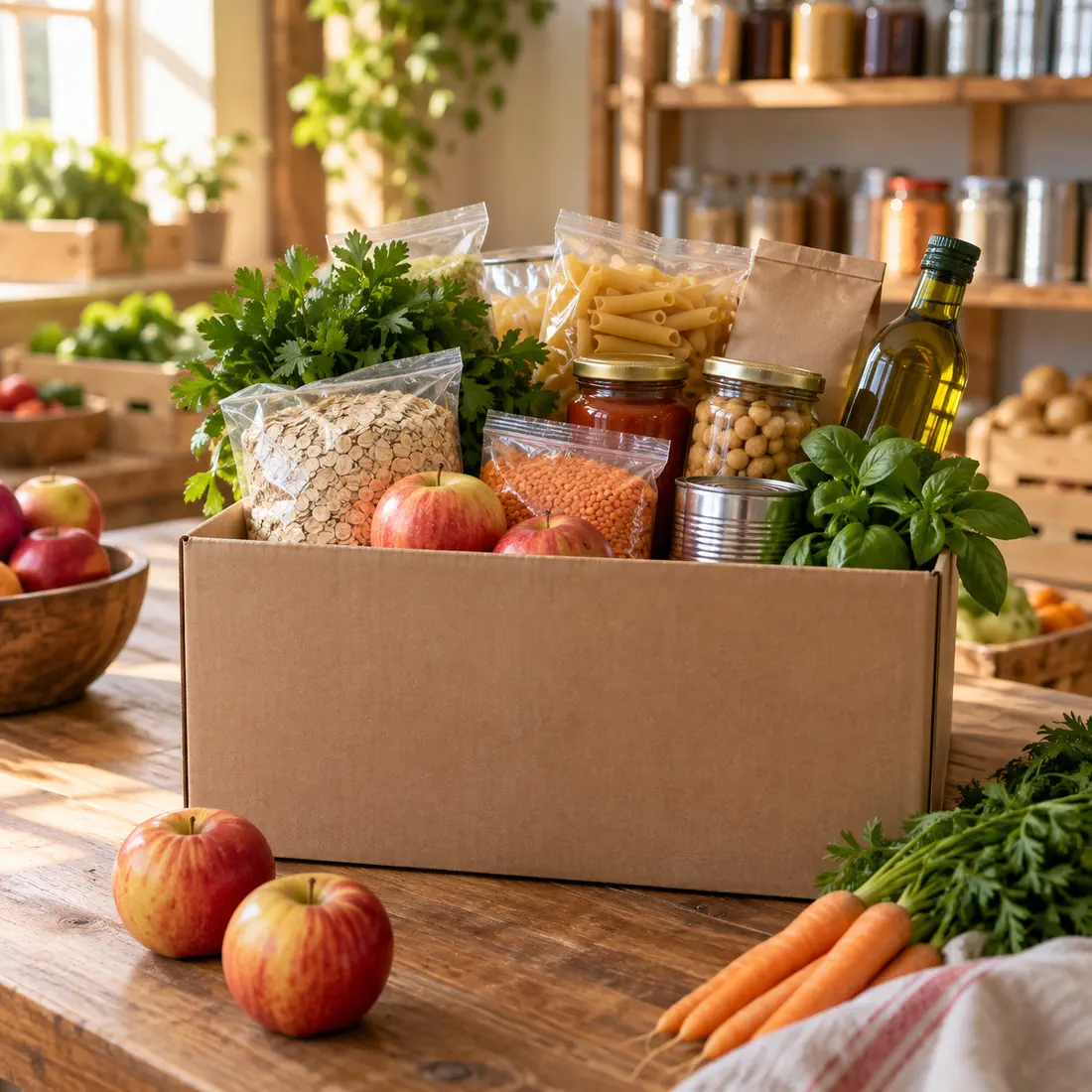
Staples such as rice, pasta, pulses, oil, tinned goods, flour and dry foods can help build a food parcel. Hygiene products and packaging supplies may also be useful, depending on the activity and on how much can be stored.
When it comes to prepared food or products that need refrigeration, coordination matters most of all. A donation that arrives on time and in the right conditions can become a hot meal, or a portion that reaches a family without delay.
A donation that arrives with dignity
Beyond the item itself, a food donation carries a message: nobody should have to face going without on their own. Discreet distribution, tidy packaging and a friendly welcome let the person receiving help feel that they are seen, and not only their difficulty.
You can donate once, arrange a regular food donation, or choose a cash donation that lets us buy exactly what is short. Whichever way you choose, arranging it in advance helps us turn giving into precise help.